Your boat upholstery takes a beating every time you head out on the water. Between the relentless Florida sun, saltwater spray, humidity, sunscreen, food and drink spills, and general everyday wear, it does not take long for seats and cushions to look tired and worn. But here is the thing most boat owners do not realize: a lot of that damage is preventable. With the right cleaning techniques and a consistent routine, you can dramatically extend the life of your upholstery and keep your boat looking sharp for years to come.
At Florida Marine Upholstery, we work with boat owners all across Broward County, Miami-Dade County, and Palm Beach County every single day. One of the most common things we hear from customers is that they wish they had known how to properly care for their upholstery before the damage became serious. Cleaning the wrong way, or simply neglecting the upholstery altogether, is responsible for a large portion of the reupholstery jobs we take on. That is why we put together this detailed, practical guide to help you get it right from the start.
Why Proper Cleaning Matters More Than You Think
Cleaning your boat upholstery is not just about keeping up appearances, though that certainly matters when you are entertaining guests or showing off your vessel. Regular, proper cleaning is what prevents small problems from turning into expensive ones. Salt residue left on vinyl works into seams and stitching and accelerates deterioration. Sunscreen and body oils break down the protective coating on marine vinyl over time. Mold and mildew spores, which are everywhere in South Florida's warm, humid air, will happily colonize any surface that stays damp long enough.
The goal of a good cleaning routine is to remove these harmful substances before they have a chance to do lasting damage. Done consistently and correctly, cleaning is the single most cost-effective thing you can do to protect your upholstery investment.
What Not to Use: Common Mistakes That Cause Damage
Before we get into what you should use, let us talk about what you should absolutely avoid. The biggest mistake boat owners make is reaching for whatever cleaning product happens to be under the sink. Household cleaners are formulated for indoor surfaces, and many of them are actively harmful to marine vinyl and fabric.
Bleach is one of the most commonly misused products. While it does kill mold and mildew, it also strips the plasticizers out of marine vinyl, leaving it dry, brittle, and far more susceptible to cracking. A little mold spot treated with bleach today may become a cracked, ruined seat panel in a year or two. The same goes for ammonia-based cleaners, which degrade vinyl coatings, and harsh degreasers that are designed for engine components, not seating surfaces.
Abrasive scrubbing pads are another common mistake. They feel like they are doing a good job of getting the surface clean, but they are actually creating microscopic scratches in the vinyl. Those scratches become the perfect hiding places for mold, mildew, and dirt, and they also dull the appearance of the material over time. Always use a soft-bristle brush or a microfiber cloth.
Finally, avoid pressure washing boat upholstery at high settings. The force of water at high pressure can work into seams, saturate foam cushions, and damage stitching. If you want to use a pressure washer for rinsing, keep the setting low and hold the wand at a safe distance.
Choosing the Right Cleaning Products
For everyday cleaning, a simple solution of mild dish soap and warm water is surprisingly effective and completely safe for marine vinyl. Use about a teaspoon of soap per quart of water, apply it with a soft brush or microfiber cloth, and you will handle most light dirt and salt residue without any risk of damage.
For tougher cleaning jobs, look for products specifically formulated for marine upholstery. Star Brite Vinyl Cleaner and 303 Multi-Surface Cleaner are two widely trusted options that are designed to clean effectively without harming the material. These products are pH-neutral, free from harsh solvents, and safe for both vinyl and marine-grade fabric.
If you are dealing with mold or mildew, look for a marine-specific mold and mildew remover rather than reaching for bleach. Products like Star Brite Mold and Mildew Stain Remover are formulated to kill mold without the destructive side effects of bleach. Always follow the manufacturer's instructions and rinse thoroughly after use.
Step-by-Step: How to Clean Your Boat Upholstery
Here is the process we recommend for a thorough, safe cleaning of your boat's upholstered surfaces.
Step 1: Rinse with Fresh Water First
Before applying any cleaner, rinse all upholstered surfaces with fresh water. This removes loose salt, dirt, and debris that could otherwise scratch the surface during scrubbing. If you have just come in from a day on the saltwater, this step alone makes a significant difference in slowing down salt-related deterioration.
Step 2: Apply Your Cleaner
Mix your cleaning solution or apply your marine cleaner according to the directions. Work in manageable sections rather than trying to clean the entire boat at once. This prevents the cleaner from drying on the surface before you have a chance to scrub and rinse it off.
Step 3: Scrub Gently in Circular Motions
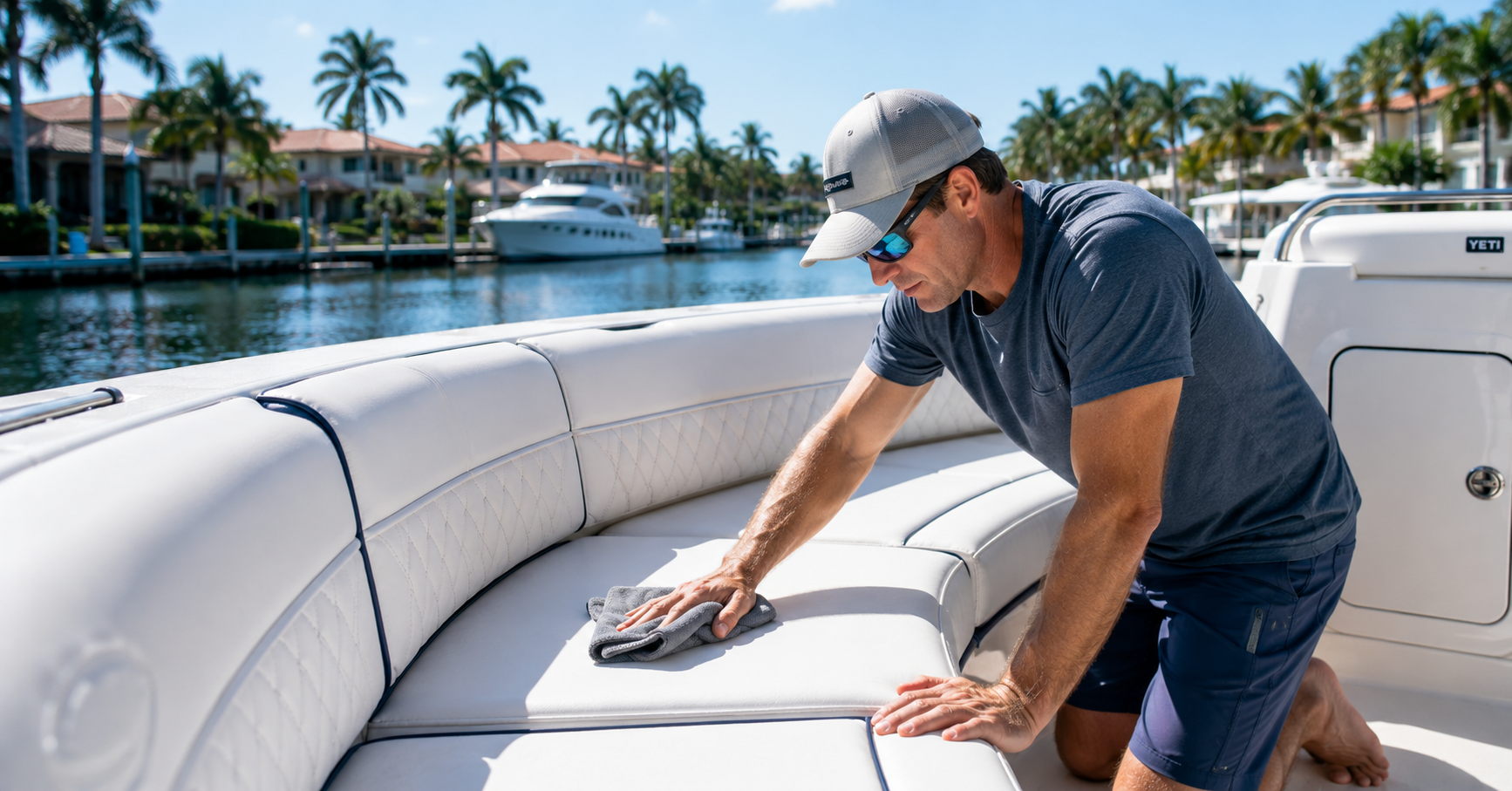
Use a soft-bristle brush or microfiber cloth and scrub in a gentle circular motion. Pay extra attention to seams, creases, and any textured areas where dirt tends to accumulate. For fabric upholstery, blot and work the cleaner in rather than scrubbing aggressively, which can damage fibers and push stains deeper.
Step 4: Address Stains Directly
For sunscreen, grease, or food stains that do not come up with general cleaning, apply a small amount of cleaner directly to the stain and let it sit for a minute or two before scrubbing. Most marine cleaners are designed to break down these types of stains with a bit of dwell time. Avoid the temptation to scrub harder. More dwell time and gentle agitation is almost always more effective than brute force.
Step 5: Rinse Completely
This step is critical and often rushed. Soap or cleaner residue left on vinyl or fabric attracts dirt and can break down the material over time. Rinse every surface thoroughly with fresh water, making sure no soapy film remains. Pay attention to seams and folds where cleaner can pool and hide.
Step 6: Dry Before Covering
Allow all upholstered surfaces to air dry completely in a shaded area before covering your boat or stowing cushions. Trapping moisture under a cover is one of the most reliable ways to grow mold, even on recently cleaned surfaces. If you are in a hurry, use a clean dry towel to speed up drying, but make sure every surface is genuinely dry before the cover goes on.
Step 7: Apply UV Protectant
Once the upholstery is clean and dry, finish with a UV protectant applied to all vinyl surfaces. In South Florida, UV radiation is one of the primary causes of vinyl fading, cracking, and stiffening. A product like 303 Aerospace Protectant creates a barrier against UV rays, repels water, and leaves a clean, non-greasy finish that makes the next cleaning job easier. Apply it every four to six weeks for continuous protection.
Special Considerations for South Florida's Climate
Boat owners in Broward, Miami-Dade, and Palm Beach County face unique challenges that boat owners in other parts of the country simply do not deal with to the same degree. The combination of year-round heat, intense UV exposure, high humidity, and saltwater creates an environment that is genuinely tough on marine upholstery.
In practical terms, this means South Florida boat owners need to clean more frequently than the national average. A cleaning routine done monthly is appropriate for boats that go out regularly. After every outing in saltwater, a fresh water rinse should be non-negotiable. And the UV protectant application schedule matters here more than almost anywhere else.
Mold and mildew are also an elevated concern in our climate. If you store your boat covered and it does not get aired out regularly, mold can establish itself even on well-maintained upholstery. On non-use days when the weather allows, remove cushion covers and let everything breathe in the open air for a few hours.
When Cleaning Is Not Enough
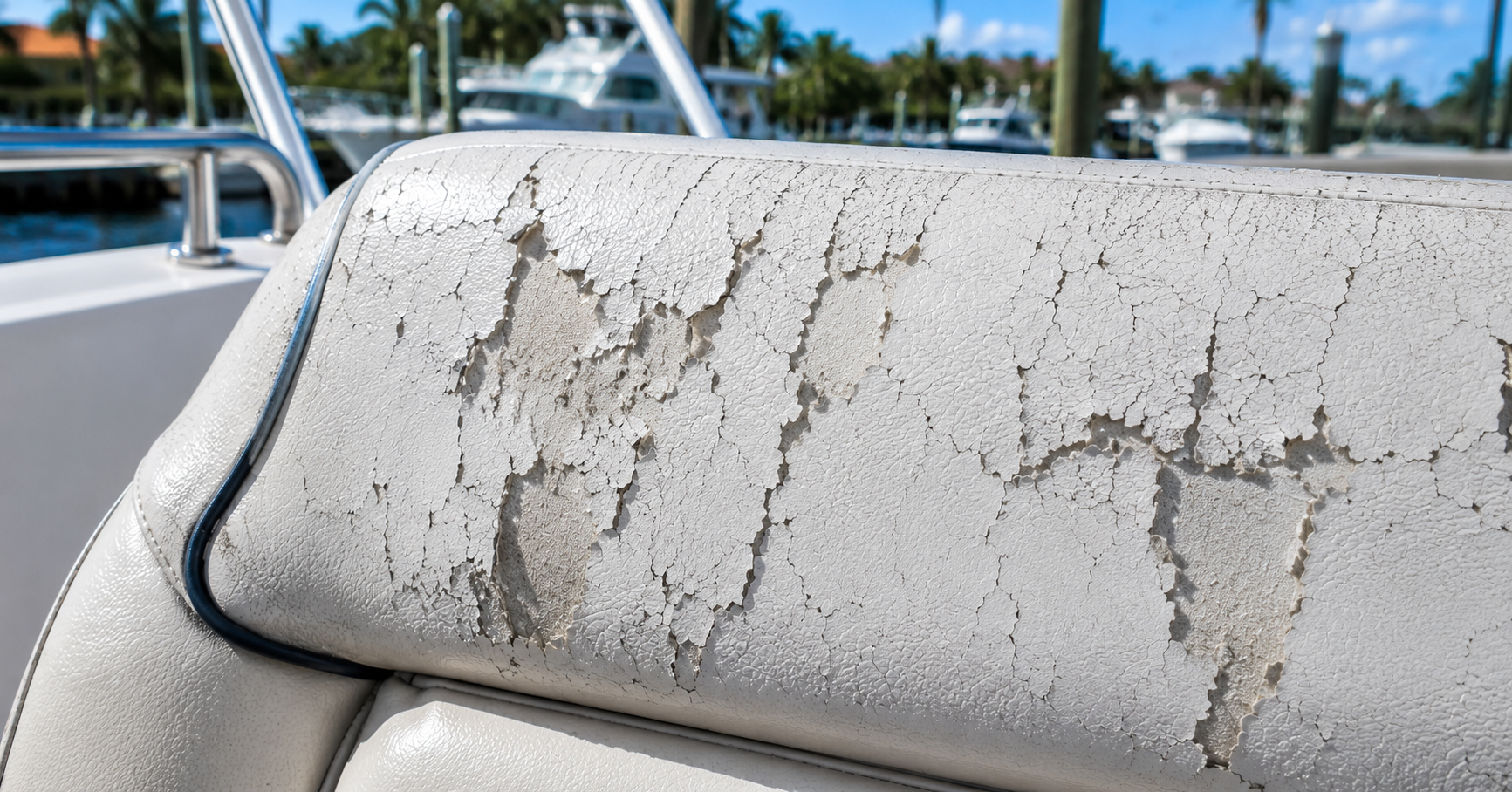
Even the most diligent cleaning routine cannot reverse certain types of damage. If your vinyl is cracking, peeling, or separating at the seams, cleaning will not fix it. If mold has penetrated into the foam core beneath the vinyl, cleaning the surface will not eliminate the source of the problem. And if the foam itself has become waterlogged or compressed, no amount of surface care will restore the comfort and support of the seat.
When you reach that point, it is time to talk to a professional. At Florida Marine Upholstery, we offer free consultations to help you understand exactly what your upholstery needs and what your options are. Sometimes a targeted repair is all that is needed. Other times, a full reupholstery is the smarter long-term investment. We will give you an honest assessment either way.
Get in Touch with Florida Marine Upholstery
We serve boat owners throughout Broward County, Miami-Dade County, and Palm Beach County with professional upholstery services, expert advice, and quality materials. Whether you have a quick question about cleaning products or you are ready to schedule a full reupholstery project, we are here to help.
Visit our contact page or fill out our contact form to get started.