When most boat owners think about upholstery, they picture the vinyl or fabric covering that they can see and touch. That is understandable because the covering is what determines the look and feel of the finished product. But underneath that covering is the foam core, and the quality of that foam has a bigger impact on the comfort, durability, and long-term value of your upholstery than most people realize.
At Florida Marine Upholstery, we work with boat owners across Broward County, Miami-Dade County, and Palm Beach County, and one of the things we are most committed to is using the right materials throughout the entire project, not just on the surface. That means marine-grade foam, always, for every project we take on. Here is why that matters and what you should know when evaluating any upholstery job.
The Problem with Regular Foam in a Marine Environment
Standard household foam, the kind used in furniture and automotive applications, is designed for indoor use in controlled environments. It is engineered for comfort in conditions where temperature, humidity, and moisture are relatively stable. Put that same foam in a boat, and you are asking it to perform in an environment it was never designed for.
The most critical problem is water absorption. Standard foam is an open-cell material that absorbs and holds water. In a marine environment where the foam is regularly exposed to saltwater spray, rain, and high humidity, a standard foam core will become saturated over time. Saturated foam is heavy, it takes an extremely long time to dry, and it creates the ideal conditions for mold and mildew to grow from the inside out. Even if the vinyl covering looks perfectly clean on the outside, the foam beneath it can be harboring mold that will eventually work its way through seams and stitching to the surface.
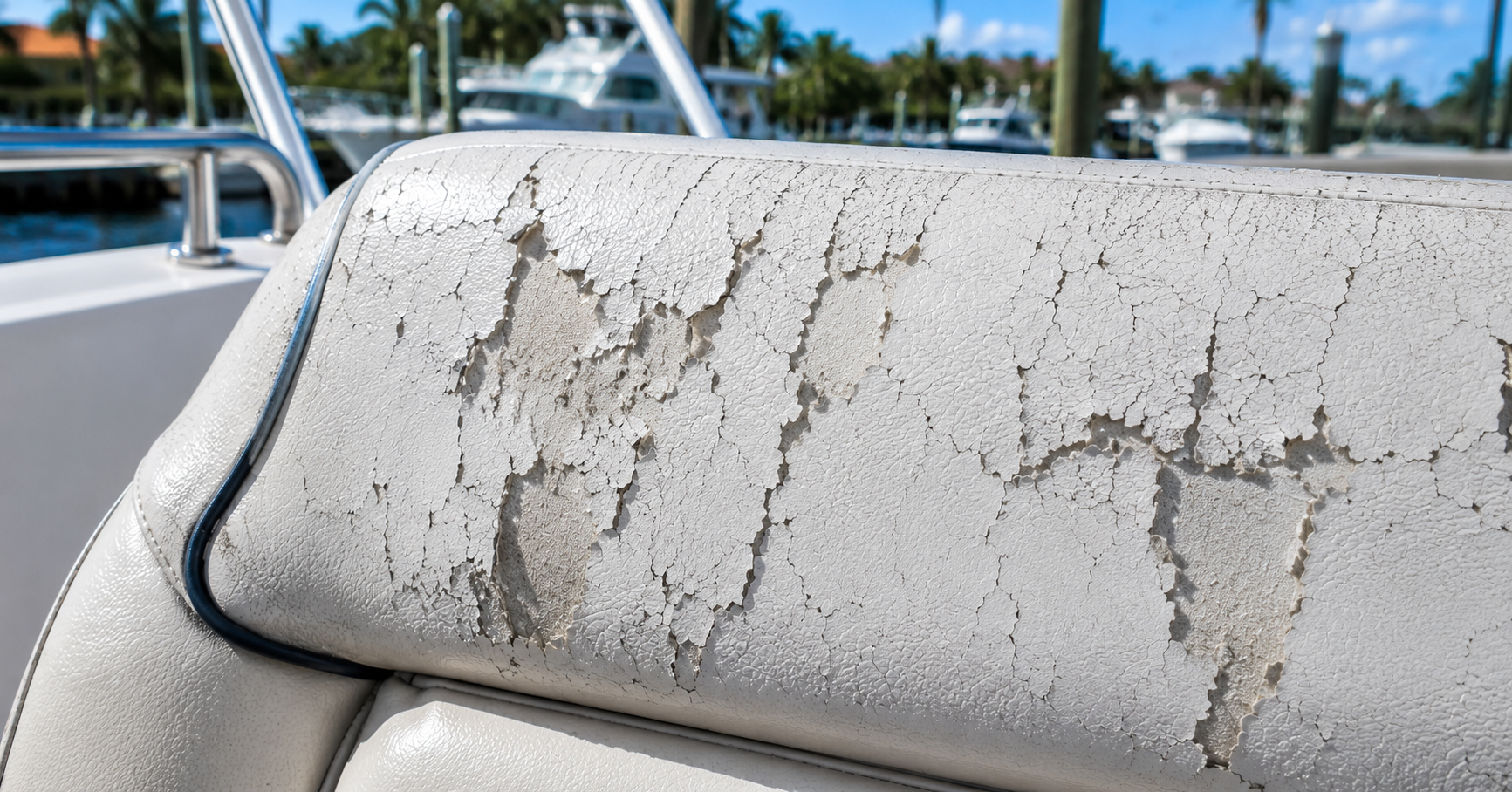
Beyond the mold problem, waterlogged foam loses its structural integrity. It stops springing back the way new foam does and begins to feel flat and unsupportive. The weight added by a waterlogged foam core is significant on larger vessels with multiple seating areas. And because the water-damaged foam is constantly damp, it accelerates deterioration of the vinyl covering from the inside, contributing to premature cracking and separation at the seams.
What Marine-Grade Foam Actually Is
Marine-grade foam is specifically formulated to perform in wet, high-humidity, high-UV environments. There are two primary categories used in boat upholstery applications, and understanding the difference between them helps clarify which type is appropriate for different parts of your boat.
Closed-Cell Marine Foam
Closed-cell foam has a structure in which the individual cells of the foam are sealed and do not interconnect. This structure makes the foam highly resistant to water absorption. Water that contacts closed-cell foam sits on the surface rather than being drawn in, which makes this type of foam ideal for applications where direct water exposure is frequent and unavoidable.
Closed-cell foam is commonly used for cockpit seating on fishing boats and center consoles, transom cushions, and any seating area that regularly gets wet. It is firmer than open-cell foam, which some people prefer for support during long days on the water, though it tends to be less plush than open-cell alternatives.
Open-Cell Marine Foam
Open-cell marine foam has an interconnected cell structure that allows air and water to move through it. At first glance that might sound counterproductive in a marine environment, but quality open-cell marine foam is treated during manufacturing with antimicrobial and mildew-resistant agents that inhibit mold growth. And because the open-cell structure allows water to drain and air to circulate, the foam dries much faster than closed-cell foam when it does get wet.
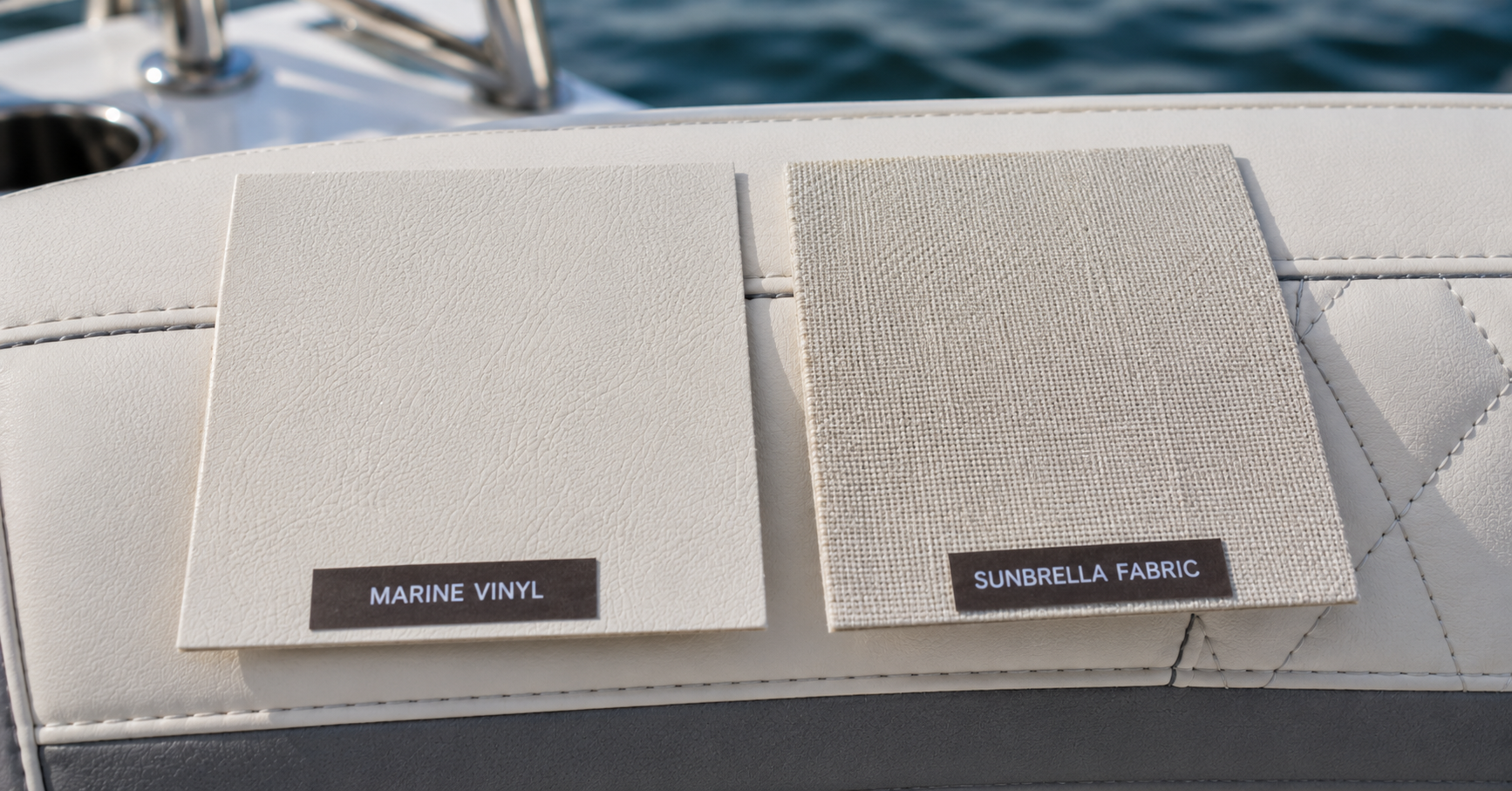
Open-cell marine foam is softer and more comfortable than closed-cell foam, which makes it the preferred choice for seating areas where comfort is a priority, such as cabin interiors, lounges, and helm seating on cruisers and yachts. It should be used with appropriate vinyl or fabric covering and good maintenance habits to maximize its lifespan.
Density and Firmness: The Two Numbers That Matter
When you are evaluating foam for marine upholstery, two specifications matter most: density and firmness (also called ILD, or Indentation Load Deflection).
Density
Density measures how much material is packed into a cubic foot of foam and is expressed in pounds per cubic foot. Higher density foam contains more material, which generally means it lasts longer, holds its shape better over time, and provides more consistent support. For marine upholstery, a minimum density of 1.8 pounds per cubic foot is considered appropriate for general seating. For helm seats and other areas that receive heavy daily use, a density of 2.0 pounds per cubic foot or higher is recommended.
Low-density foam might feel comfortable when it is new, but it compresses and loses its shape much faster than higher-density foam. It is a common cost-cutting measure for shops that want to offer lower quotes, but it is a false economy for the boat owner because the seats will need to be replaced much sooner.
Firmness (ILD Rating)
Firmness, measured by the ILD rating, describes how much resistance the foam offers under pressure. A low ILD number indicates softer foam, while a higher number indicates firmer foam. The appropriate firmness depends on the intended use of the seat.
Helm seating that is used for extended periods while navigating benefits from a higher ILD rating that provides good support for the lower back and reduces fatigue over a long day on the water. Lounge seating and sun pads can use a lower ILD rating for a softer, more relaxed feel. At Florida Marine Upholstery, we match foam density and firmness to the specific application on your boat rather than using a one-size-fits-all approach.
The Real Cost of Cutting Corners on Foam
We have seen this scenario play out more times than we can count. A boat owner gets a quote from a shop that seems attractively priced, the work gets done, and for a year or two things look fine. Then the seats start to feel flat. A musty smell appears. The vinyl begins to look uneven or sunken. By the time the owner realizes what has happened, the foam inside is waterlogged, moldy, or completely compressed, and the entire job needs to be done again.
Using inferior foam, whether non-marine-rated foam or low-density marine foam that is not appropriate for the application, is one of the most reliable ways for an upholstery shop to cut costs in a way that is not immediately visible to the customer. The savings are real for the shop in the short term. For the boat owner, those savings evaporate quickly when the job has to be redone.
When evaluating upholstery quotes, it is worth asking specifically what foam the shop uses, what the density rating is, and whether it is a marine-grade product. A reputable shop will answer those questions directly and confidently. If the answer is vague or dismissive, that is a meaningful signal.
How Long Does Marine Foam Last?
Quality marine-grade foam, properly installed and maintained, should last the full life of the upholstery covering it, typically seven to fifteen years or more depending on usage and conditions. The foam should not need to be replaced independently of the vinyl or fabric covering under normal circumstances.
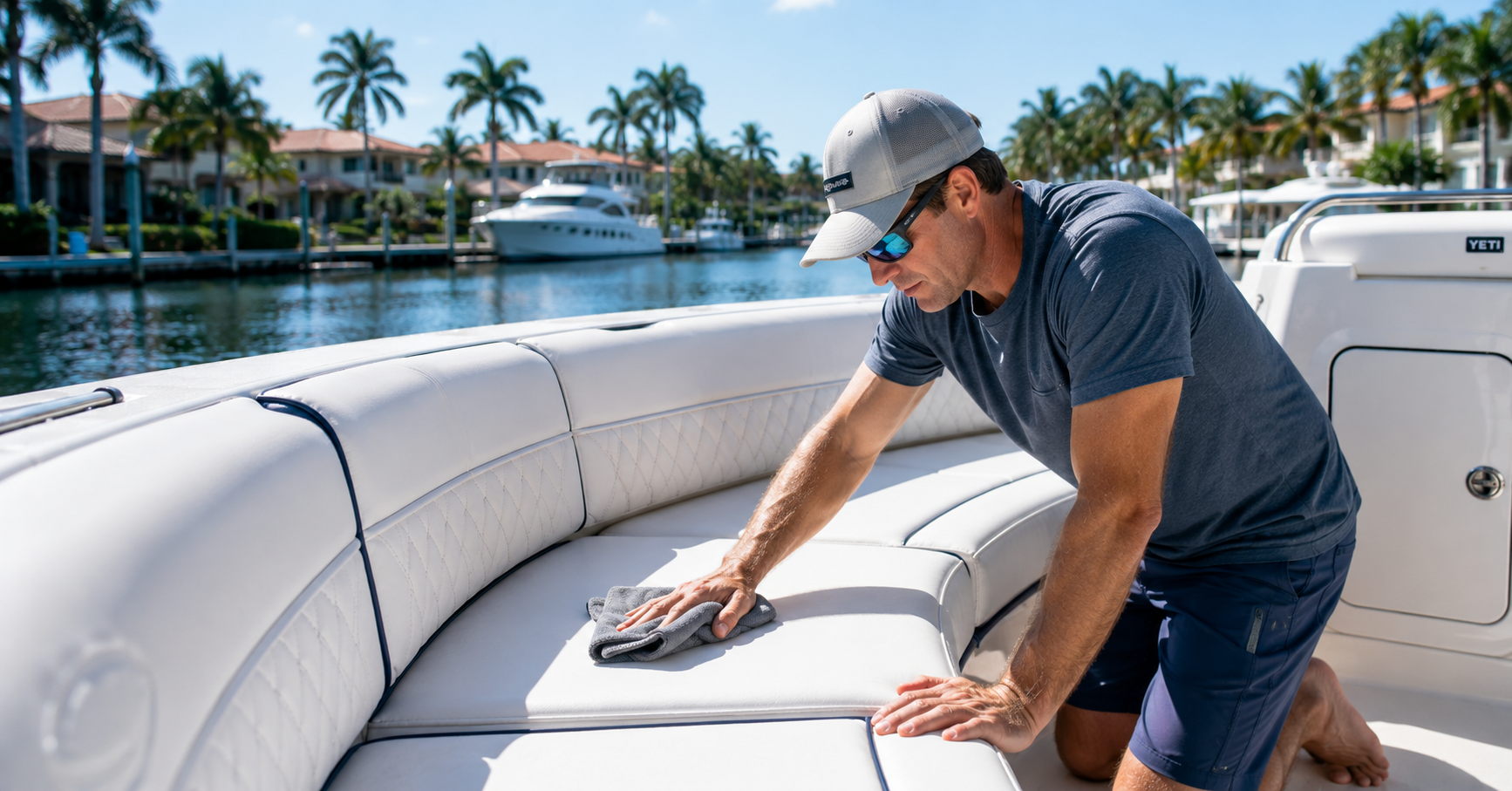
Foam lifespan is extended by the same practices that protect the covering: keeping the boat covered when not in use, rinsing with fresh water after saltwater outings, allowing the upholstery to dry completely before covering, and addressing any vinyl damage such as cracks or seam separations promptly so that water does not reach the foam core.
When foam does need to be replaced, whether due to age, water damage, or previous use of inferior materials, the difference new marine-grade foam makes is immediately apparent. The comfort improvement alone is significant, and the knowledge that the job has been done correctly with materials that will last is genuinely satisfying.
Our Commitment to Quality Materials
At Florida Marine Upholstery, we use marine-grade foam in every project we complete, selected specifically for the application. We do not cut corners on materials because our reputation depends on doing the job right, and we stand behind our work. We are happy to discuss the specific foam specifications we use for any project and to explain our recommendations in plain language so you understand exactly what you are getting.
If you are in Broward County, Miami-Dade County, or Palm Beach County and are considering a reupholstery project, head to our contact page or fill out our contact form and we will be happy to walk you through your options.