There is no place quite like South Florida when it comes to boating. The warm weather, stunning water, and access to both the Atlantic Ocean and the Intracoastal Waterway make Broward County, Miami-Dade County, and Palm Beach County among the best boating destinations in the world. But if you own a boat in South Florida, you also know the other side of that equation. The climate that makes this place extraordinary also creates an environment that is genuinely unforgiving for boat upholstery.
The UV index in South Florida is among the highest in the continental United States for much of the year. The salt air carries corrosive particles that settle on every surface of your boat every day, whether you go out on the water or not. The humidity creates ideal conditions for mold and mildew to establish themselves on any surface that is not properly maintained. And the frequent afternoon thunderstorms during summer months mean your upholstery gets wet regularly, which accelerates all of the above.
The good news is that protecting your upholstery from these threats is genuinely achievable. It does not require expensive products or enormous amounts of time. What it requires is understanding what the threats are and applying the right protective measures consistently. Here is what we recommend to every boat owner we work with in South Florida.
Invest in a Quality Boat Cover
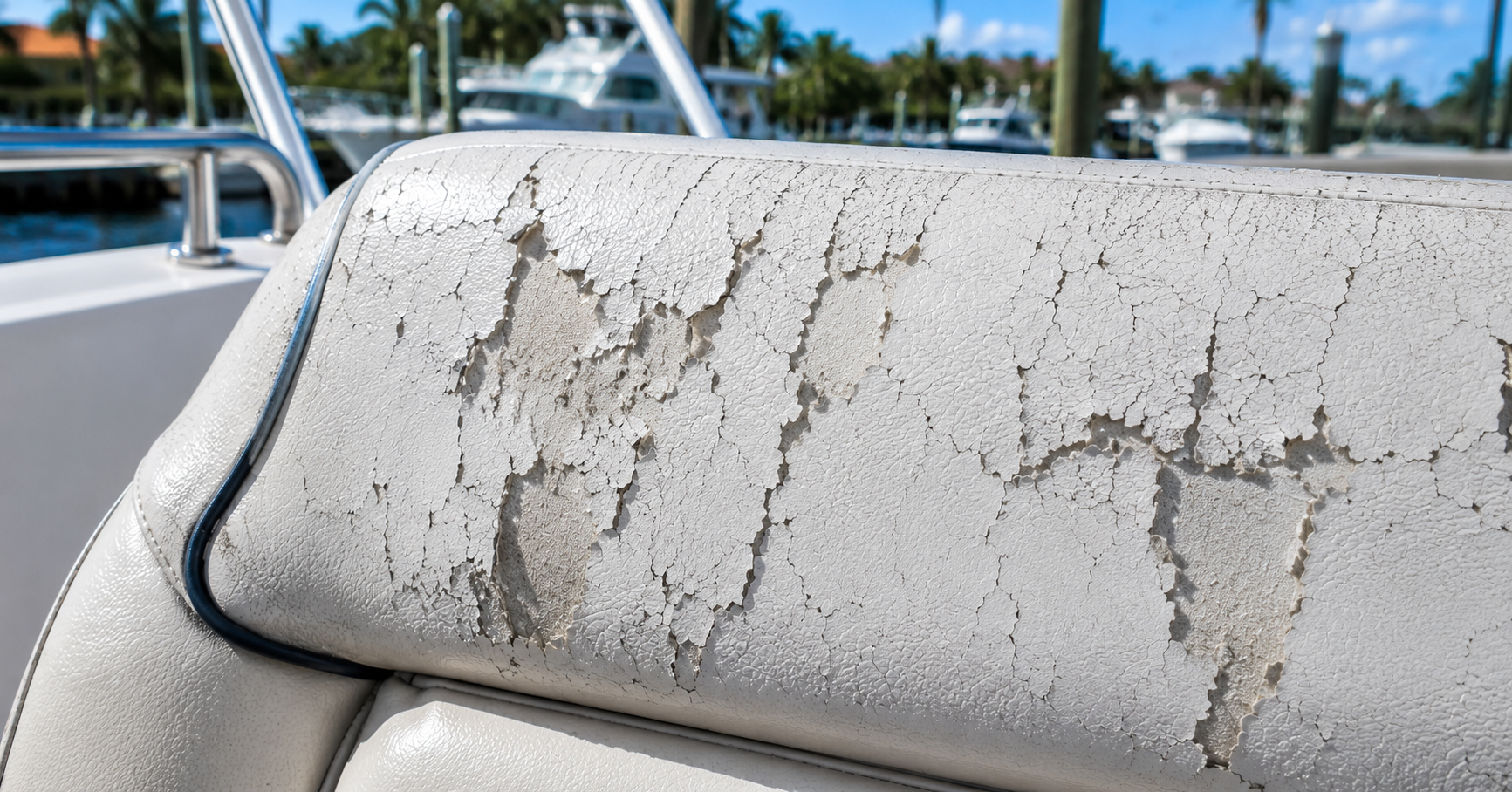
Of all the protective measures you can take for your boat upholstery, a well-fitted, quality boat cover is the single most impactful. When your boat is docked or stored, a good cover blocks the direct UV exposure that causes fading, drying, and cracking of marine vinyl. It also keeps rain, salt spray, bird droppings, tree debris, and other environmental contaminants off your upholstered surfaces.
Not all boat covers provide equal protection, and the difference matters. A cheap universal cover that fits loosely allows wind to move beneath it, which causes the cover to flap and rub against vinyl surfaces, creating abrasion damage over time. A well-fitted cover that sits snugly prevents this problem and provides dramatically better protection.
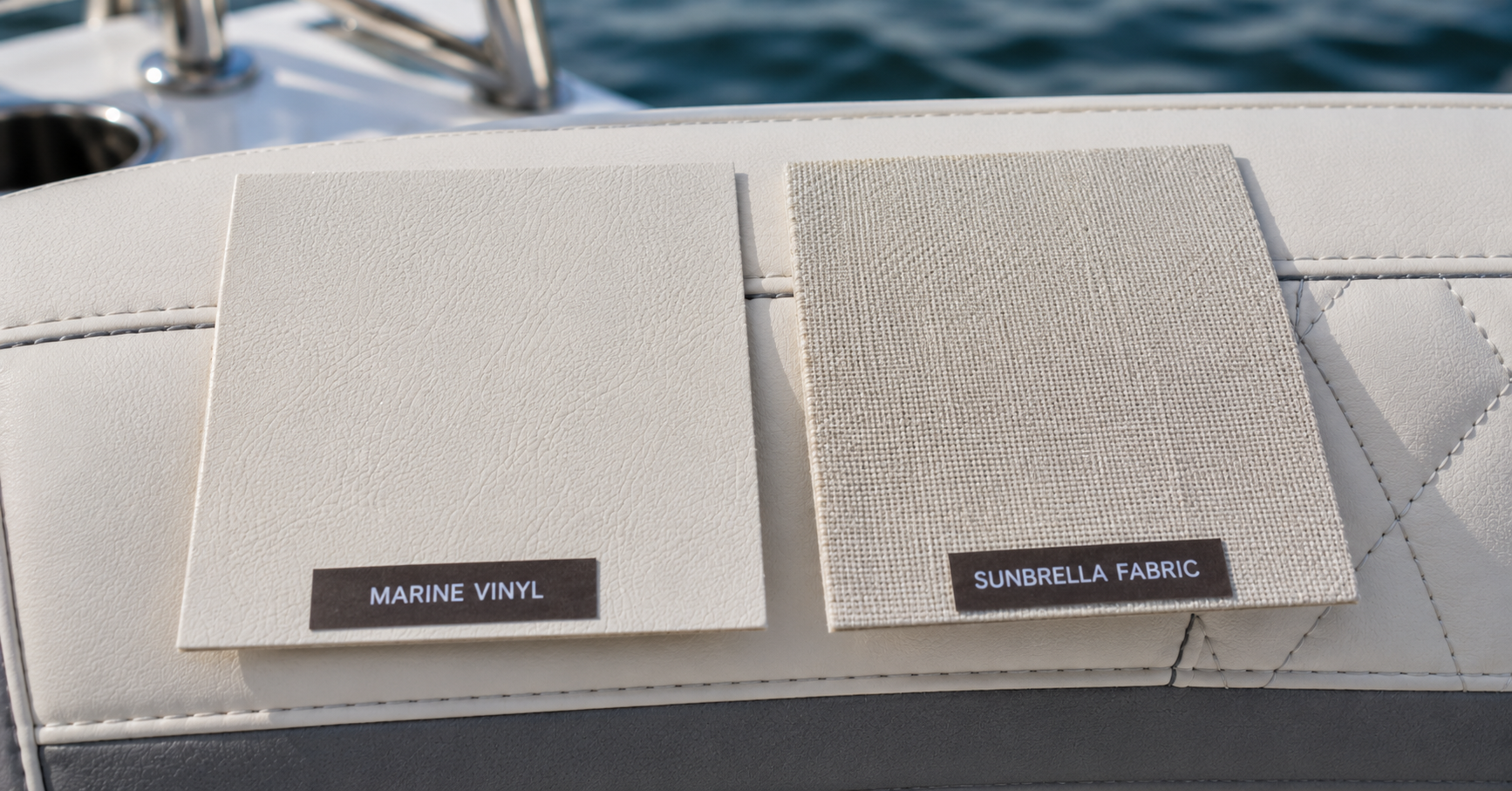
Material matters for boat covers just as it does for upholstery. Look for covers made from breathable, UV-resistant materials. Breathability is critical because a cover that traps moisture beneath it creates exactly the warm, damp, enclosed environment that mold thrives in. A cover that breathes allows moisture to escape while still blocking UV rays, rain, and debris. Covers made from solution-dyed polyester or acrylic fabrics designed for marine use offer the best combination of UV protection, durability, and breathability.
If you have invested in quality upholstery, a quality cover is a natural complement to that investment. The incremental cost of a properly fitted marine-grade cover pays for itself quickly in extended upholstery life.
Apply UV Protectant on a Regular Schedule
Even with a cover in place, your upholstery is exposed to UV radiation every time you take your boat out. UV exposure during a single long day on the water in South Florida is substantial, and that exposure accumulates over the lifetime of the upholstery. UV protectant applied regularly to vinyl surfaces significantly slows the degradation caused by that exposure.
Products like 303 Aerospace Protectant work by creating a thin UV-blocking layer on the surface of the vinyl. This layer absorbs and disperses UV radiation before it can penetrate and begin breaking down the plasticizers in the vinyl that keep it soft and flexible. A vinyl that loses its plasticizers becomes stiff, prone to cracking, and far more vulnerable to further damage. UV protectant delays that process significantly.
In addition to UV protection, these products also repel water and resist dust and dirt adhesion, which makes routine cleaning easier and more effective. The vinyl stays cleaner between maintenance sessions and rinses off more easily when you do clean it.
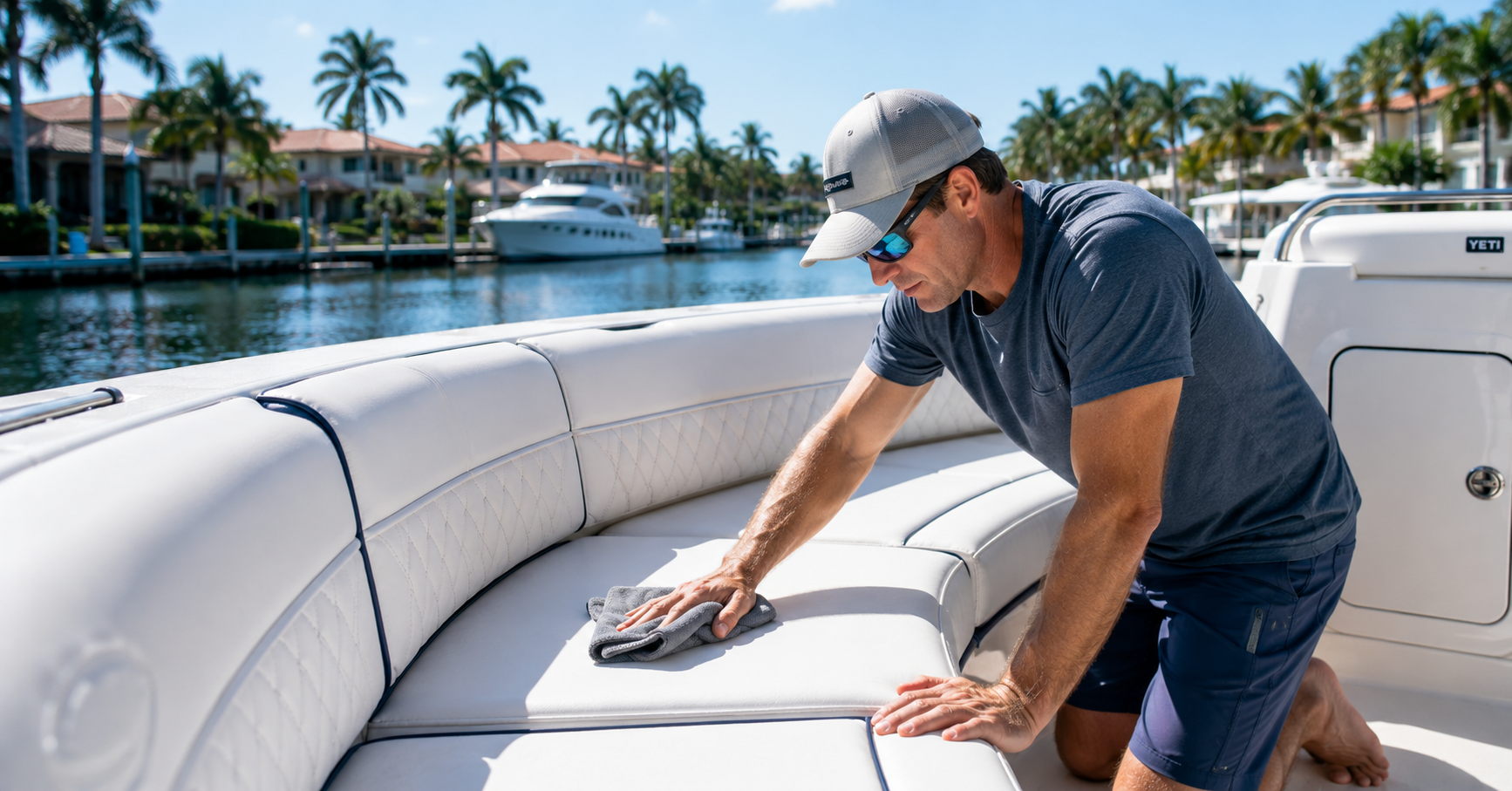
The application schedule that works best in South Florida's intense UV environment is every four to six weeks. After cleaning, apply the protectant to all vinyl surfaces, allow it to penetrate briefly, and then buff off any excess with a clean microfiber cloth. Done consistently, this habit is one of the most reliable predictors of long upholstery life.
Make Fresh Water Rinsing a Non-Negotiable Habit
Salt is corrosive to marine upholstery in ways that are easy to underestimate. When saltwater spray dries on vinyl, it leaves behind salt crystals that are hygroscopic, meaning they actively draw moisture from the surrounding air. This creates a persistently damp microenvironment on the vinyl surface, even when it has not rained and you have not been on the water. That persistent dampness is an ideal growing condition for mold and mildew.
Salt also penetrates into seam stitching and acts as a mild abrasive that degrades thread over time. The mineral content in salt deposits accelerates the breakdown of both vinyl coatings and the plasticizers that keep vinyl flexible. And because salt tends to accumulate in the creases, folds, and seams where vinyl surfaces meet, it targets exactly the areas that are already the most vulnerable to deterioration.
The solution is simple and costs nothing beyond a few minutes of time: rinse all upholstered surfaces with fresh water after every outing in saltwater or brackish water. Even a quick rinse that removes the bulk of the surface salt is meaningfully better than no rinse at all. A thorough rinse that clears salt from seams and crevices is significantly better still. This habit alone can add years to the life of your upholstery.
Choose Lighter Colors When Reupholstering
Color choice is a practical protective decision, not just an aesthetic one. Dark-colored marine vinyl absorbs significantly more solar energy than light-colored vinyl, which means it runs hotter in direct sun. This additional heat accelerates the breakdown of plasticizers in the vinyl, increases the rate of UV degradation, and makes the seated surface uncomfortably hot to touch during peak sun hours.
Lighter colors reflect more solar energy, run cooler, and are therefore subject to somewhat less UV-related stress than darker colors in the same conditions. In practical terms, white, cream, light gray, and other lighter tones will typically show less UV fading and maintain their flexibility longer than dark navy, black, or dark brown alternatives.
Lighter colors also tend to show UV fading less dramatically when it does occur. A dark vinyl that has faded looks visibly off-color against any newer components. A light vinyl that has faded often remains within an acceptable color range because the starting point is already light. This is particularly relevant in South Florida where some degree of UV fading over a long service life is essentially inevitable.
Minimize Direct Sun Exposure During Storage
The cumulative UV exposure your upholstery receives over its lifetime is the sum of every hour it spends in direct sun, whether you are on the water or sitting at the dock. Reducing unnecessary UV exposure during storage, when no one is using the boat anyway, is an easy way to extend upholstery life without any sacrifice to your time on the water.
If you have the option to dock in a covered slip or store your boat under a carport or covered structure, that protection adds up to meaningful cumulative UV reduction over the course of a year. Even partial shade is meaningfully better than no shade. A boat stored in a slip that receives afternoon shade will experience significantly less UV exposure than an identical boat stored in full sun year-round.
Combined with a quality cover and consistent UV protectant application, shaded storage is part of a complete protection strategy that gives your upholstery the best possible chance of a long and attractive service life.
Address Small Problems Before They Become Large Ones
One of the most cost-effective protective strategies is simply paying attention and acting quickly when you notice early signs of trouble. A small crack in the vinyl, caught early, can sometimes be treated with a vinyl conditioner to slow its progression. A seam that is beginning to separate can be repaired by a professional before water reaches the foam core. A mold spot caught at the surface level can be treated and eliminated before it penetrates beneath the vinyl.
The same problems ignored for a season or two become far more expensive to address. That small crack becomes a large split. The separating seam opens fully and allows water to saturate the foam. The surface mold becomes an entrenched foam-core mold problem that requires replacing everything. The cost difference between addressing problems early and dealing with them after they have progressed is almost always substantial.
Monthly inspections, even quick ones, make a genuine difference. Running your hand along seams, looking at vinyl surfaces in good light, and pressing on cushions to check foam integrity takes fifteen minutes and can catch problems at the stage where they are still minor.
Know When to Call a Professional
Every protective strategy has its limits. There comes a point where even the best-maintained upholstery reaches the end of its serviceable life, and there are situations where damage has progressed to the point where professional attention is the only real solution. Knowing when you have reached that point, and acting on it decisively rather than continuing to patch and delay, is itself a form of good stewardship of your boat.
At Florida Marine Upholstery, we offer free consultations for boat owners throughout South Florida. We will take an honest look at your current upholstery, tell you what we see, and give you straightforward advice about whether maintenance, repair, or replacement is the right next step. We serve customers throughout Broward County, Miami-Dade County, and Palm Beach County and bring years of experience with South Florida's specific boating conditions to every project.
Visit our contact page or fill out our contact form to get started.